
The Art of Owning Your Day: My Heartfelt Student Time Management Guide
I know exactly how you feel. You wake up with your alarm blaring, your chest tight with a familiar anxiety. There is an exam next week, an assignment due tonight, a pile of laundry staring at you from the corner, and a group project you haven’t even started. You feel like you are sprinting as fast as you can, yet you are still falling behind.
For a long time, I lived in that exact state of suffocating overwhelm. I was constantly exhausted, always feeling guilty when I tried to rest, and terrified that I just wasn’t smart or capable enough to keep up. But I learned something that saved my mental health and my grades: time management isn’t about working yourself into the ground; it is about protecting your peace.
I want to share the simple, real, and emotional strategies that helped me reclaim my life from the chaos of student deadlines. This isn’t corporate advice from a textbook. This is survival advice from someone who was right there in the trenches with you.
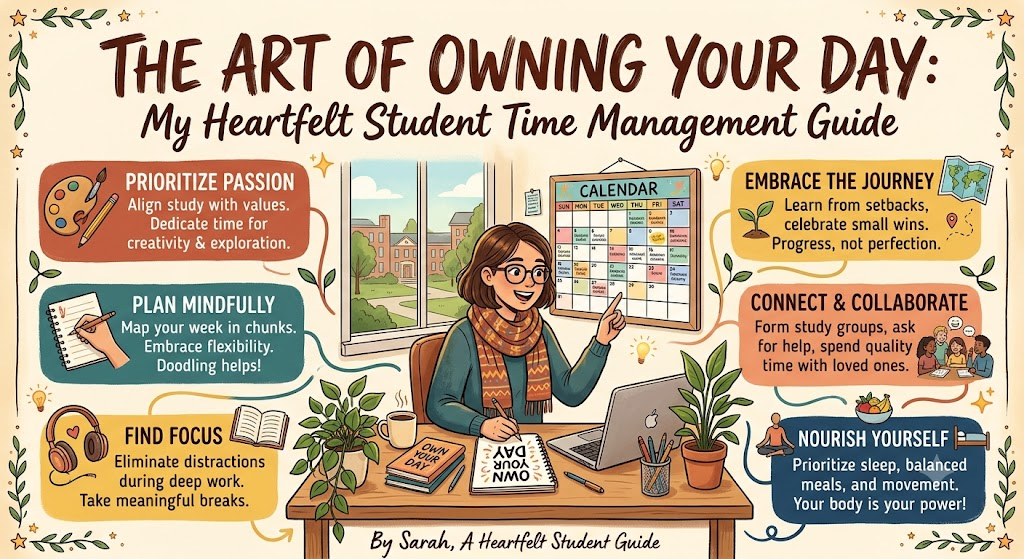
1. The Emotional Trap: Why We Actually Procrastinate
Before we talk about calendars or apps, we have to talk about the tears and the avoidance. For the longest time, I thought I was lazy. I would look at a blank document for hours, scroll through social media, and then hate myself for wasting time.
Then I realized a beautiful, liberating truth: procrastination is not a reflection of your laziness; it is a reflection of your anxiety. We avoid our work because the thought of failing or not doing it perfectly terrifies us. We freeze up because the task feels like a mountain we cannot climb.
When I stopped calling myself lazy and started realizing I was just overwhelmed, everything changed. I learned to face the fear instead of the clock.
My Emotional Takeaway
The next time you find yourself scrolling through your phone instead of studying, do not beat yourself up. Breathe. Acknowledge that you are feeling scared or pressured. Forgive yourself for the last hour you lost, and just focus on the next five minutes.
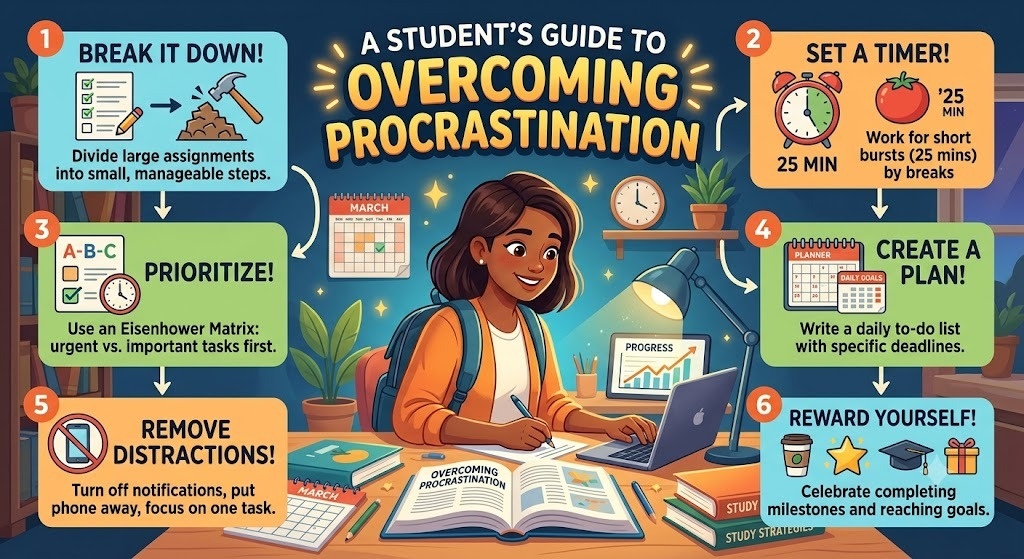
2. The 5-Minute Rule: Breaking the Paralysis
When you have a 2,000-word essay to write, the hardest part is not the writing—it is opening the blank document. The sheer size of the task paralyzes your brain.
To trick my mind out of this panic, I started using the 5-Minute Rule. I would tell myself, “I am only going to open this textbook and read for exactly five minutes. If I want to stop after five minutes, I am allowed to stop guilt-free.”
What happened? Nine times out of ten, once I overcame the friction of starting, my brain adjusted, the panic subsided, and I kept going for an hour.
My Emotional Takeaway
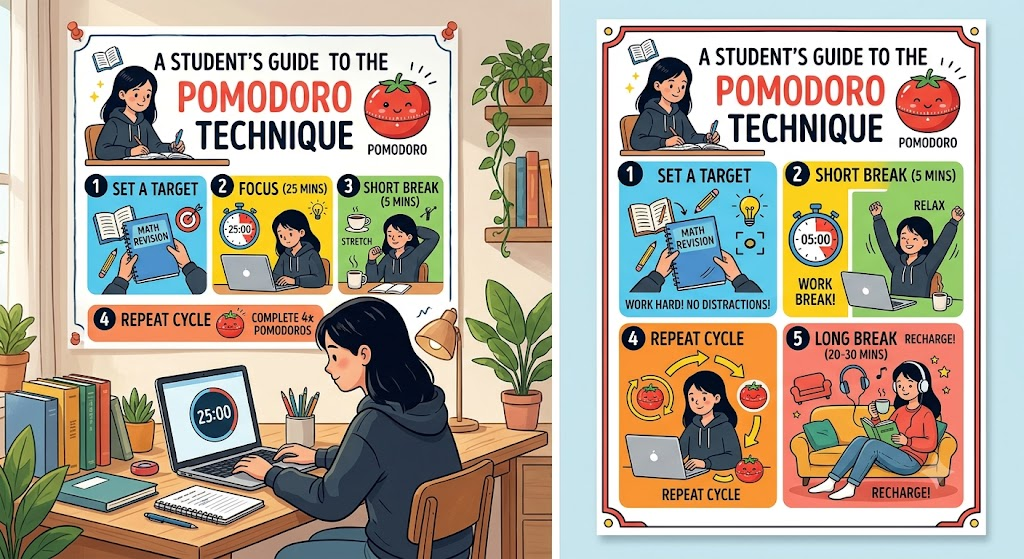
Pair this rule with the Pomodoro Technique (25 minutes of work, 5 minutes of breathing). When I did this, I stopped viewing study sessions as massive marathons. They became small, bite-sized sprints that I could easily handle without losing my mind.
3. The Power of “No”: Guarding Your Limited Energy
As a student, everyone wants a piece of you. Your friends want you to hang out, your club wants you to organize an event, and your family needs you to visit. Because I wanted to make everyone happy, I used to say “yes” to everything.
The result? I ended up completely drained, staring at my textbooks at 2:00 AM, crying because I had no energy left for myself.
I had to learn the painful but necessary lesson of setting boundaries. Saying no to others is saying yes to your own mental well-being. You only have a limited amount of emotional and physical energy every day. If you give it all away, you will have nothing left to build your own future.
My Emotional Takeaway
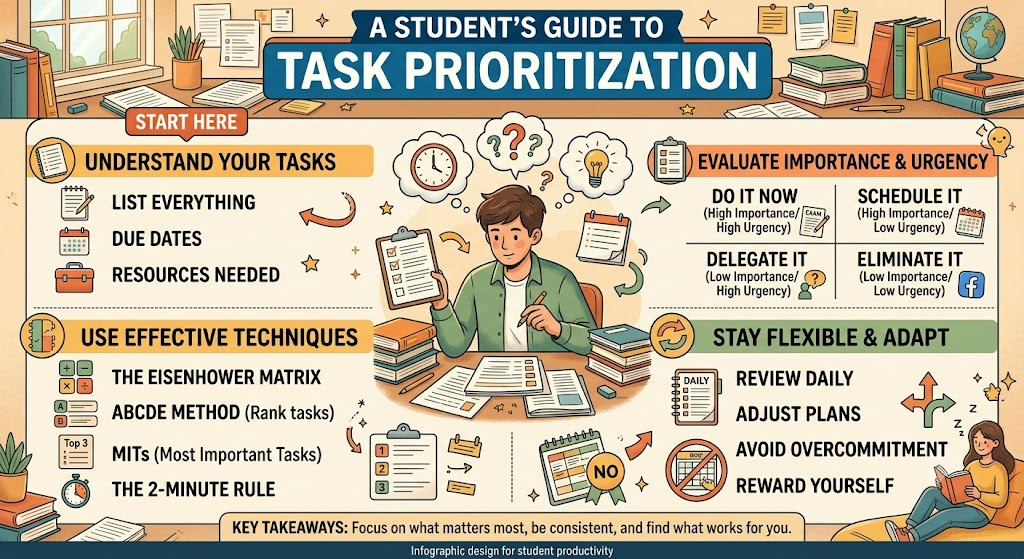
To help me sort out my priorities without feeling guilty, I started using prioritization techniques to filter my days. I learned that just because something is screaming for my attention right now doesn’t mean it is actually important for my life.
A Reality Check: How I Transformed My Daily Routine
To show you that this isn’t just theory, look at how dramatically my days changed once I stopped trying to do everything and started managing my time with love:
| Daily Habit | My Old, Chaotic Student Life | My New, Mindful Student Life |
| Morning Routine | Wake up late, panic, skip breakfast, run to class. | Wake up 30 minutes early, drink tea, read my daily plan. |
| Study Sessions | Try to study for 6 hours straight, end up scrolling on my phone. | Focused 25-minute Pomodoro blocks with real breaks. |
| Phone Usage | Kept on the desk next to me, constantly buzzing with alerts. | Placed in another room or inside a drawer on silent mode. |
| Nighttime Vibe | Guilt-ridden scrolling, sleeping at 3:00 AM, feeling defeated. | Reviewing my wins, packing my bag, sleeping peacefully by 11:00 PM. |
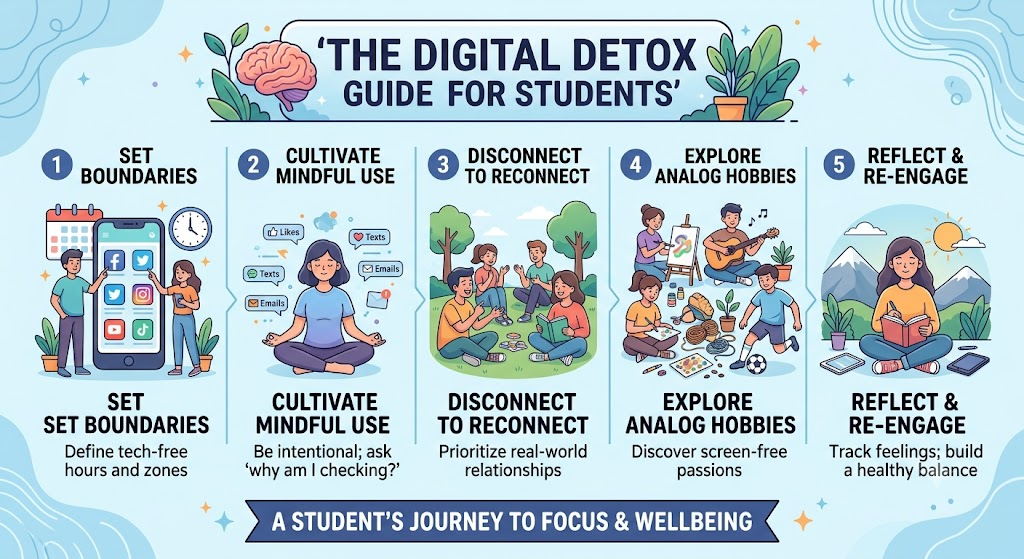
4. The Digital Detox: Reclaiming Your Brain Chemistry
We have to talk about the glowing screen in your hand. Social media apps are literally designed by geniuses to steal your focus and keep you hooked.
I remember nights where I would sit down to study at 8:00 PM, click on a notification “just for a second,” and suddenly look up to find it was 10:30 PM. The feeling of disgust and emptiness that followed was awful. Your phone is a portal of comparison and distraction that leaves your brain too tired to think deeply.
When I started studying, I began physically separating myself from my phone. I didn’t just put it face down; I locked it in a drawer or left it in another room entirely.
My Emotional Takeaway
The first few days of doing this felt strange, almost lonely. But then, a miracle happened. My mind became quiet. I could read a page of a book and actually remember what it said. I realized that my attention span wasn’t broken; it was just crowded out by digital noise. Give your brain the quiet space it deserves to grow.
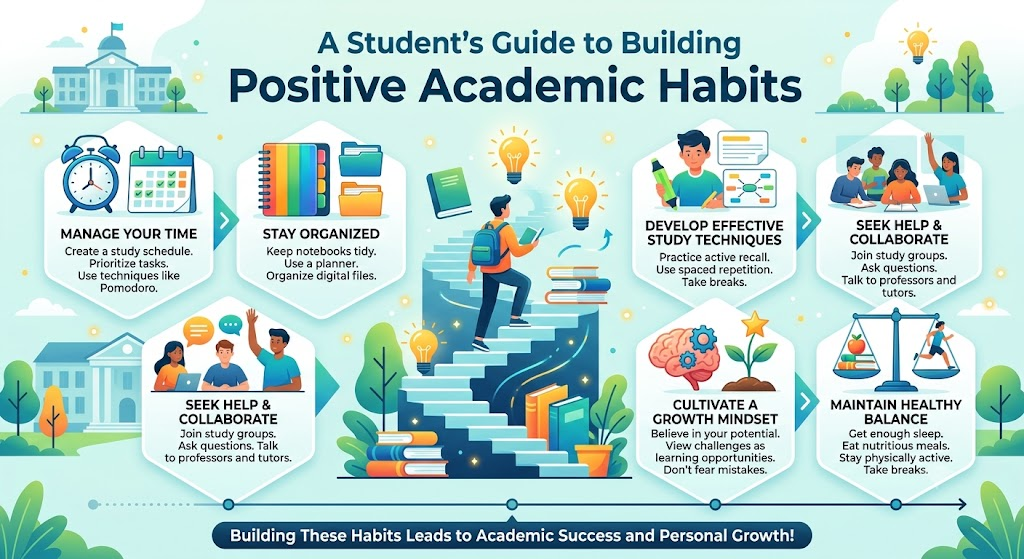
5. Celebrating the Tiny Victories: You Are Doing Better Than You Think
The biggest mistake I made for years was waiting until final exam grades came out to feel proud of myself. If I didn’t get an A+, I felt like an absolute failure, completely ignoring all the late nights and hard work I put in.
Please don’t do that to yourself. If you sat at your desk today and studied for 30 minutes despite feeling tired and sad, that is a massive victory. Celebrate it. Write it down in a notebook before you go to sleep.
When you validate your own efforts, your brain stops associating studying with pain and punishment. Instead, it starts viewing it as a journey of self-love and progress.
My Emotional Takeaway
By taking two minutes every night to acknowledge what went right rather than obsessing over what went wrong, I broke the cycle of academic burnout. I started waking up inspired to try again instead of dragging myself out of bed defeated.
Conclusion: You Are More Than Your Productivity
Your worth as a human being is not measured by the number of items you cross off your to-do list today. You are a student, yes, but you are also a living person who needs sleep, laughter, friendship, and quiet moments of wonder.
Time management is not a whip to punish yourself into working harder. It is a shield to protect your time so you can study hard, achieve your dreams, and still have a beautiful, joyful life outside the classroom.
Be kind to yourself today. You are learning, you are growing, and you are going to be completely fine.